Oak Ridge National Lab · ORNL INTERNAL HOMEPAGE
How might we use user behavior to guide internal homepage redesign?
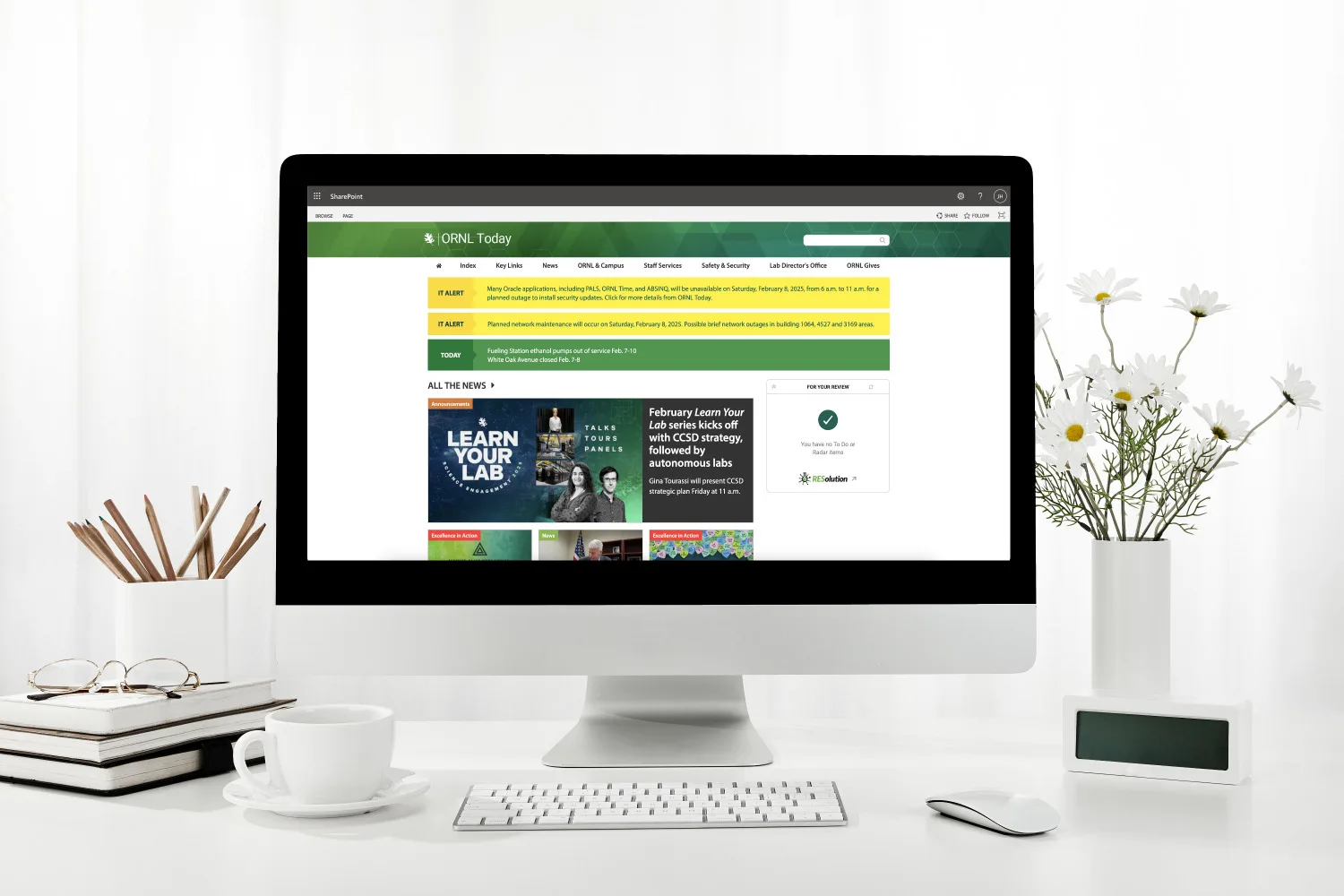
To support a data-informed redesign of ORNL’s internal homepage, I led a multi-method research effort to uncover how employees use (and avoid) ORNL Today. My work revealed major misalignments between user needs and site structure, and provided a prioritized set of requirements to guide a more intuitive, role-relevant experience.
BY THE NUMBERS
- 54%selected different responses for greatest value and primary purpose
- 41% vs 24%Tools: greatest value vs primary purpose
- DATE
- Spring 2025
- ORGANIZATION
- Oak Ridge National Laboratory
- ROLE
- ResearchDesign Strategy
- DELIVERABLES
- Deck identifying shortcomings of internal homepage with identifications of areas for improvement
Determining Research Direction
- 01
Diagnosing Misalignment Between Design and Use
I analyzed a user survey that combined structured scales, purpose/value selections, and open text responses. Combining exploratory factor analysis of survey results and site clickstream data, I demonstrated that most users accessed ORNL Today for tools—not news—despite the homepage being visually and structurally optimized for the latter.
- 02
Understanding Role-Based Differences in Satisfaction
Technical research staff—those most dependent on internal tools—visited less often and rated the site lowest on usability. I surfaced this divide and quantified it using segmentation and satisfaction scores, revealing a need for role-responsive design.
- 03
Translating Feedback into Actionable Priorities
A qualitative researcher coded open-text responses to extract the most common frustrations. Combining these with my quantitative analysis, I produced a clear list of design requirements and created a prioritization matrix to help teams focus on high-impact changes first.
- 04
Framing What Needs Further Research
For ambiguous or high-effort areas (e.g., dashboards, custom feeds), I outlined a research roadmap with methods like card sorting, contextual inquiry, and prototype testing—ensuring the team could move forward iteratively with confidence.
Survey Findings
My scoping and framing on this project provided concrete design recommendations for a new internal homepage (right, top) based on mixed methods analysis of a survey as well as a straightforward research roadmap (right, below) identifying concrete future directions for the project.
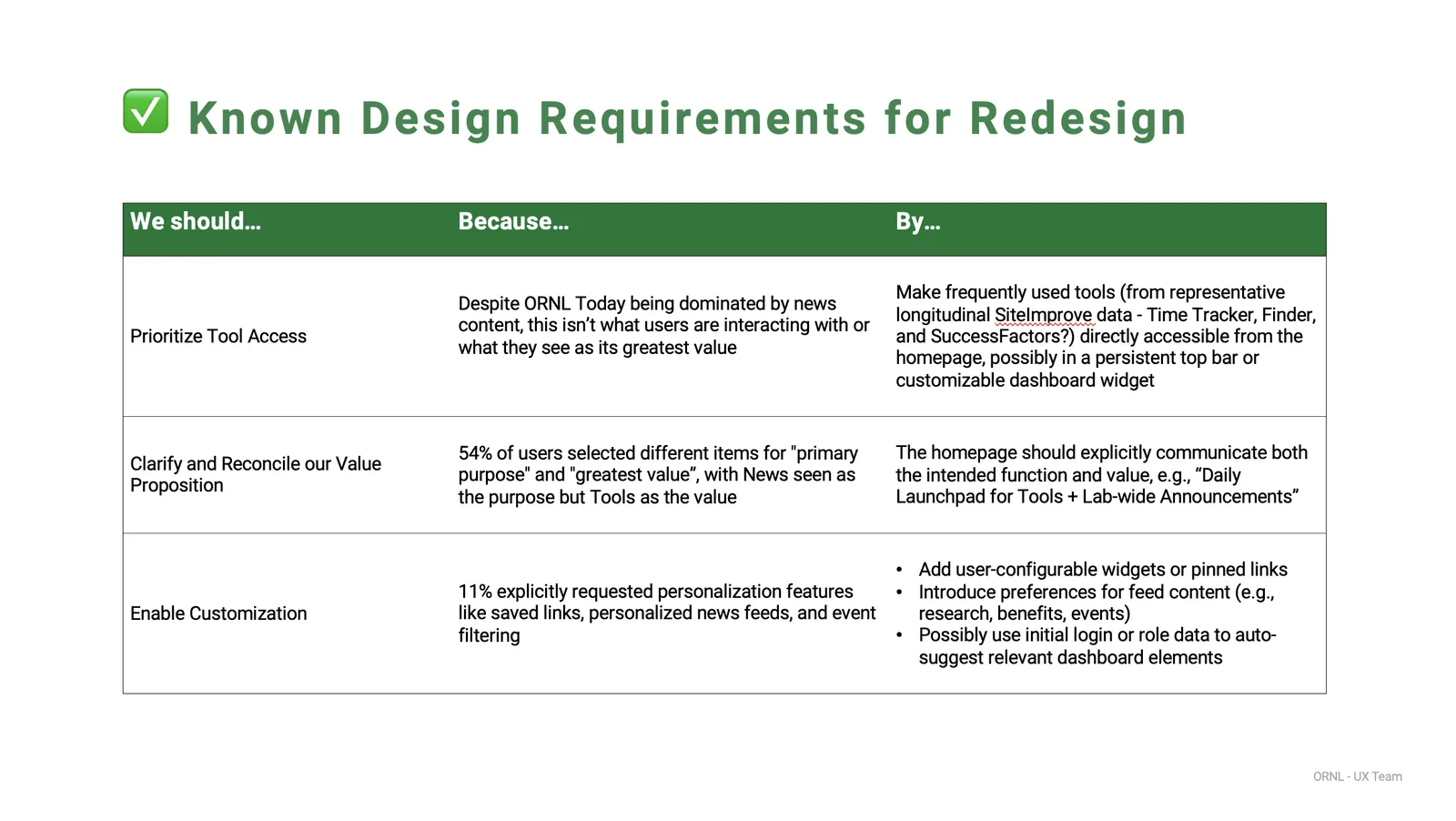
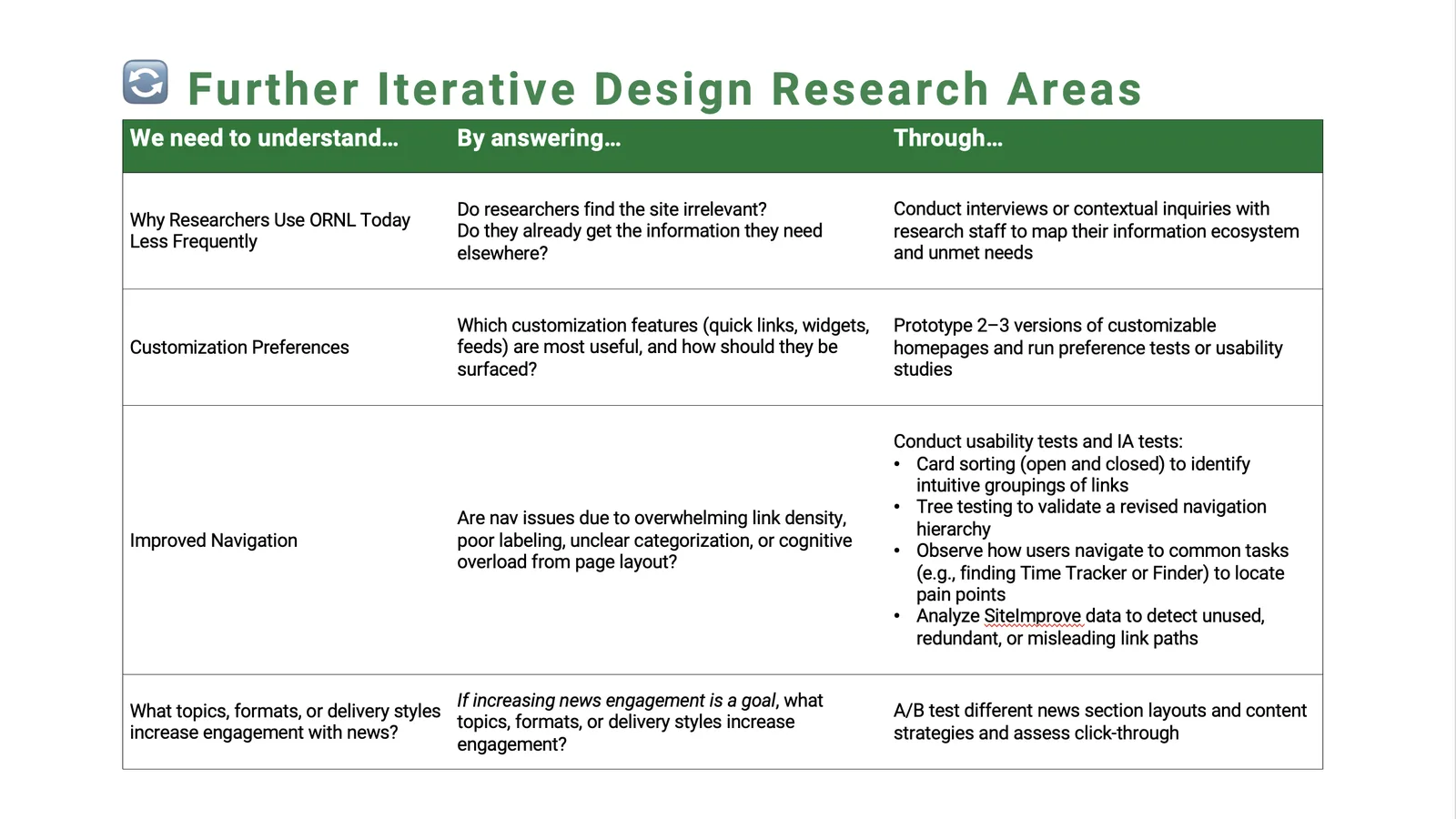
Triangulating survey data, usage analytics, and coded feedback to create actionable recommendations demonstrates my ability to evaluate and realign complex intranet experiences.